What Happens to Wedding Flowers After the Big Day?
You’ve spent months dreaming about your wedding flowers. The ceremony arch, the candlelit centerpieces, and the bouquet you’ll carry down the aisle.
So what actually happens to all those flowers after the reception ends? One of the most common questions we hear is: Do we get to keep them?
The answer is: sometimes. But not always in the way you might expect.
Here’s what actually happens behind the scenes, and how to plan intentionally if you want your flowers to live on beyond the day.
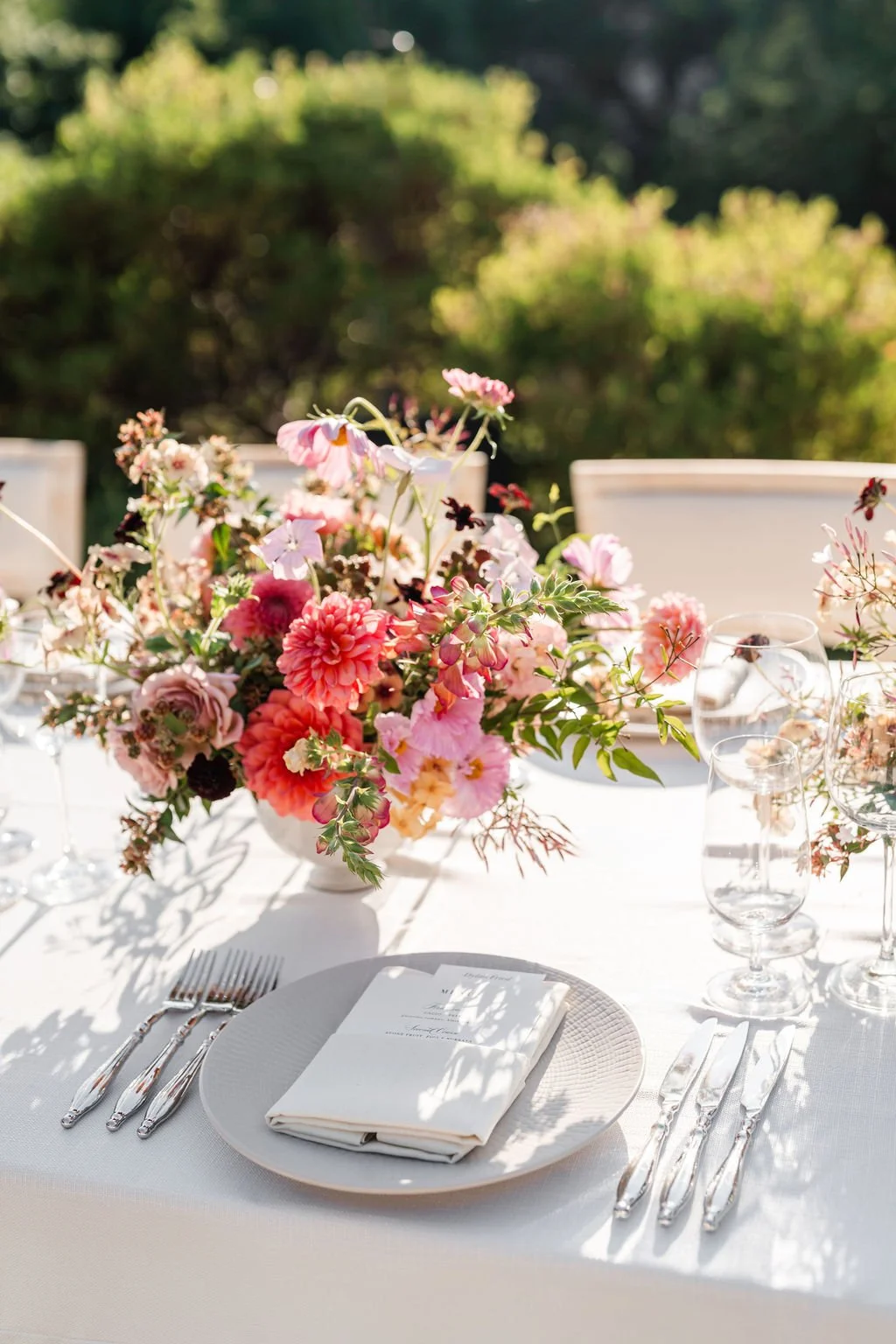
Photography: Stephanie Lynn Co | Planning: Olivia Grace Events | Floral Design: Anastasia Andenmatten
What Actually Happens at the End of the Night
While you and your guests are heading to the after-party, your floral team is beginning the breakdown process.
At most venues, everything needs to be cleared out that same night, often within a tight timeframe. Our team returns to:
Break down all floral installations
Sort what can be repurposed, taken home, donated, or composted
Leave the space completely cleaned and cleared
Collect, inventory, and pack all rental items like vases, structural mechanics, and candleholders
Our rental inventory plays a key role in our sustainability efforts for reducing waste.
Can You Keep Your Wedding Flowers?
First, the reality check: can you just take your wedding flowers home?
The short answer: some, yes. All, no.
You absolutely can take some of your wedding flowers home, but it's rarely as simple as loading a car with centerpieces at the end of the night.
Typically yes:
Bridal bouquet
Bridesmaids’ bouquets
Select centerpieces (depending on design and rentals)
Typically no:
Large-scale installations (arches, ceremony structures, hanging installs)
Aisle meadows or grounded designs
Anything built into mechanics or structural elements
Rental vessels and containers
Why not?
The sheer volume of florals at a wedding can make it genuinely impractical for couples and guests to take flowers home. It is your florist’s responsibility — not yours, not your planner’s, not your venue’s — to leave the venue cleared and cleaned.
Many pieces are designed for visual impact, not portability. For instance, some are built on structural frameworks, secured in place, or constructed in a way that requires dismantling rather than simply picking up and carrying out.
Depending on the weather, location, specific ingredients and where flowers are in their natural lifespan, some arrangements may be wilting past their prime come the end of the night — especially after a long outdoor ceremony or a warm reception space.
By the end of the night, your flowers have been on display for 8-12 hours and may be reaching the end of their natural lifespan. Depending on the weather, location (outdoor ceremony or reception), some arrangements may be wilting and not ideal for keeping.
Let’s break down the nuance here as well as your options.
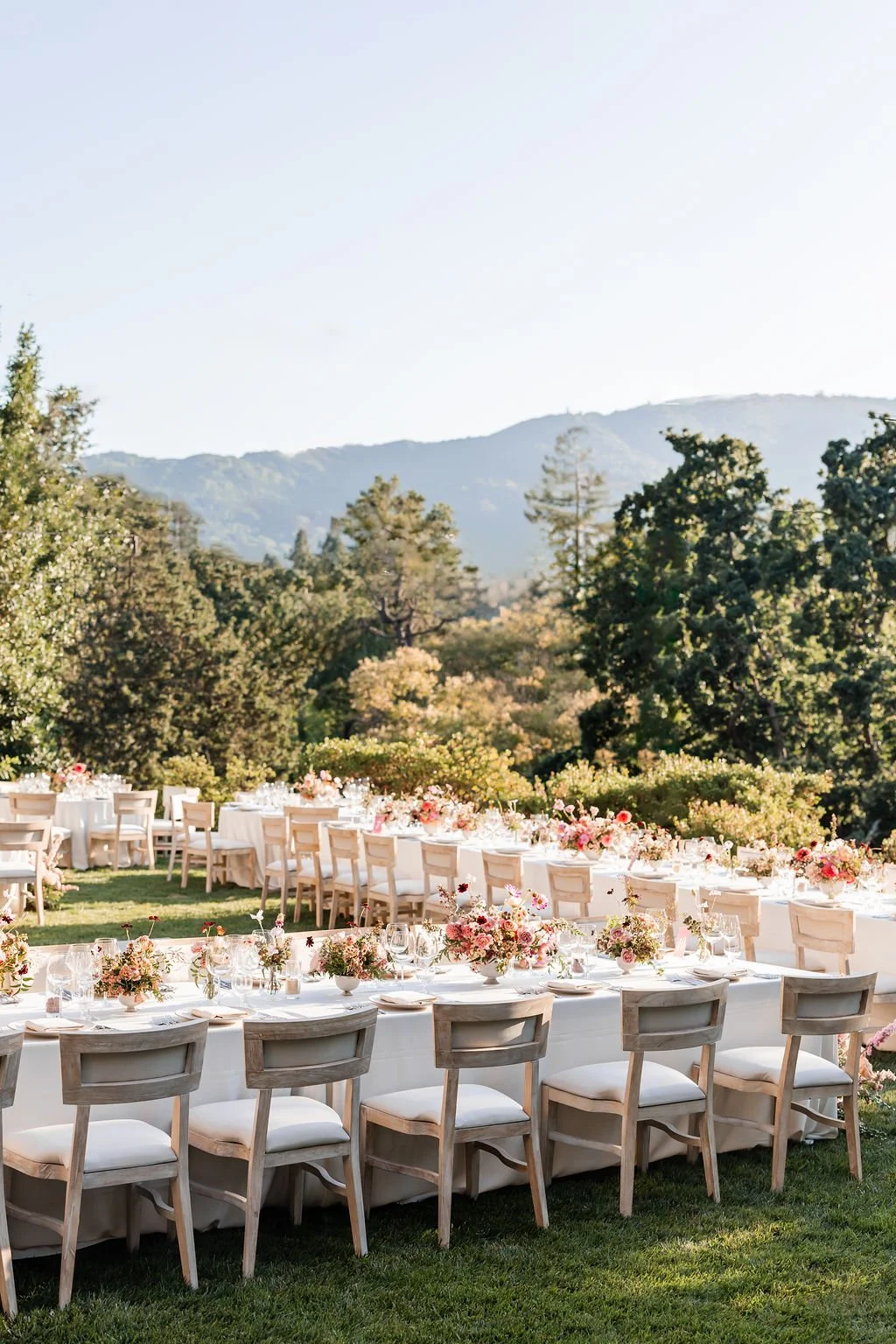
Photography: Stephanie Lynn Co | Planning: Olivia Grace Events | Floral Design: Anastasia Andenmatten
Option 1: Let Guests Take Them Home
One of the most popular and meaningful ways to extend the life of your flowers.
If you’d like guests to take centerpieces or bud vases home, that add-on service should be discussed from the very beginning of the floral planning process. By requesting this service in advance, your florist can factor in take-home vases and brief your planner on which items are available to guests and which need to be collected.
A single wedding can involve dozens of arrangements, hundreds or thousands of stems, and large-scale installations that took an entire day to build. Transporting all of that home isn't just inconvenient… for most couples and their guests, it's genuinely a burden.
A few tips:
Ask your florist in advance which pieces are “take-home friendly” and easy to transport
Coordinate with your planner ahead of time
Think about making a simple announcement or providing subtle signage
Consider the conditions; will your reception be outside in direct sunlight and heat? This ultimately affects the quality of the flowers.
Know that handling this take home service intentionally does require additional coordination and labor at time of breakdown and may incur additional costs
Option 2: Donation (When Logistics Allow)
Many couples love the idea of donating their wedding flowers, and when it aligns logistically, it’s a beautiful way to extend their impact.
However, donation logistics are more complicated than they might seem. Donation should be a genuine gift, not a haphazard hand-off of wilted leftovers. This requires:
Pre-coordination with an organization that is actively accepting flower donations
A clear plan for pickup or delivery
Timing that aligns with both the venue and recipient
Flowers that are still in good condition at the end of the night — a team member will go through each arrangement, give it fresh water, and pull anything that isn't looking its best.
We are happy to offer floral donation coordination with a client’s chosen partner as an add-on service. If this matters to you, bring it up early in the planning process and we can help make sure your flowers reach someone who will genuinely appreciate them.
Option 3: Composting and Responsible Disposal
Composting deserves more credit than it gets.
When flowers are composted responsibly, they break down into nutrient-rich organic matter that feeds new soil, supports plant life, and stays completely out of the landfill. That's a fully closed loop! Your wedding flowers, in some small way, becoming part of something growing.
The alternative is flowers in a plastic bag in a landfill, which is not the visual couples want to sit with, but it's important context for why composting is such a meaningful default.
For us, composting is part of our commitment to low-waste, environmentally conscious design. When keeping or donating isn't logistically feasible, composting is always the responsible next step.
What About the Bridal Bouquet?
Your bridal bouquet is a little different from the rest. It's yours and yours alone!
If you’d like to preserve it, reach out to us in advance for our recommendations of local preservation artists in the San Francisco Bay Area, Sonoma, Napa, and beyond. Some preservation methods work best when flowers are processed quickly, so timing is a consideration.
We’ve seen past clients preserve their bouquets beautifully. Some ideas:
Pressed flower art turns individual blooms into framed keepsakes
Freeze-drying preserves the full three-dimensional shape of the bouquet
Resin casting encases flowers in clear blocks or jewelry

Photography: Stephanie Lynn Co | Planning: Olivia Grace Events | Floral Design: Anastasia Andenmatten
What Most Couples Don’t Realize
Pinterest doesn’t show the behind the scenes, but there are a few things that often come as a surprise, that are an important piece of the full picture:
Flowers are perishable and not designed to last far beyond the event
Your wedding flowers typically reach their absolute peak on wedding day (your florist spends the entire week before your wedding carefully tending to each stem to make this happen!)
Large installations are built for impact, not for disassembly and transport
Breakdown happens quickly and on a set deadline, often late at night
Trying to “save everything” can add complexity without adding a ton of value
How to Plan Ahead for Your Wedding Flowers (and Why It's Worth It)
If you have strong opinions about what happens to your wedding flowers, you have more control than you think!
Here are a few things to consider early in your flower planning process:
Will your guests actually be okay taking centerpieces home with them, or will it feel like a hassle for people traveling, Ubering, or heading to an after-party?
Will your ceremony or reception flowers be fully or partially outdoors? In summer heat or direct sun for extended periods?
Would you like to preserve your bouquet?
Are you expecting everything to be "saveable" at the end of the night, or are you at peace with flowers having a beautiful, finite life?
Does donation matter to you? If so, is someone available and willing to manage the coordination with a recipient organization or do you want us to handle that as an add-on service?
A little planning goes a long way. We recommend letting your florist know your priorities early on.
The Bigger Picture
A slight reframe here: flowers are not meant to last forever. It’s part of what makes them so special. They are designed to create a fleeting moment, one that’s immersive, expressive, and unforgettable. But with a bit of intention, and any option you choose, your florals can have a story that extends beyond the last dance.
Planning Your Wedding Flowers?
If you're curious about our approach to sustainable wedding florals, reach out to start a conversation. We'd love to talk through ideas
Still have questions? Here's what couples ask us most.
Frequently Asked Questions About Wedding Flowers
Can I keep my wedding flowers after the reception? Sometimes. It depends on the flowers, the conditions of the day, and whether it's been planned for in advance. Some pieces travel home beautifully; others have already peaked by the end of the night. If keeping flowers or having guests take them home matters to you, let us know early in the planning process so we can build that into your breakdown plan.
What do florists do with flowers after a wedding? Our team handles the full breakdown and removal of all floral elements and rental items in accordance with your venue's timeline. As a studio committed to low-waste, environmentally conscious design, we ensure florals are either kept or donated when logistics allow, or composted responsibly in alignment with our sustainability practices.
Can wedding flowers be donated after the event? Yes, when the logistics align. Donation requires advance coordination with an organization actively accepting flowers, a clear pickup or delivery plan, and arrangements that are still in good shape at the end of the night. We offer donation coordination as an add-on service for couples who want to make this happen intentionally.
How do I preserve my wedding bouquet? Preservation is handled by a specialist outside of our studio. If you know you want to preserve your bouquet, mention it during the design process so we can point you toward our preservation partner.
How long do wedding flowers last after the event? It varies by flower variety, temperature, and how long they've been out of water. Some blooms hold for several days; others are already past their peak by the end of the reception, especially after an outdoor event or a warm venue. We spend the entire week before your wedding carefully timing each stem to hit its peak on your big day — so by the end of the night, many flowers have genuinely given everything they've got.
Check out our post with what to ask before booking your wedding florist.
Photography: Stephanie Lynn Co | Planning: Olivia Grace Events | Floral Design: Anastasia Andenmatten