How to Read a Wedding Florist Proposal: Terms, Costs, and How to Compare Quotes Side by Side
A Bay Area florist's plain-English guide to every term, fee, and line item in a wedding floral proposal. Plus how to evaluate three or four proposals side by side without going cross-eyed.

Why Wedding Florist Proposals Are So Hard to Compare
If you’re planning a wedding, at one point you might find yourself sitting with three floral proposals in front of you. One is $25K. One is $28K. One is $22K. They look kind of similar, but they use different terms, list different things, and it's hard to tell whether they include the same things at all.
You are not alone!
Wedding floral proposals are some of the most opaque documents in the entire wedding planning process. Different florists structure them differently, or use different terminology, and itemize (or don't) in very different ways. So couples are often left wondering whether they're comparing apples to apples or apples to oranges.
And then add a layer of sticker shock on top (because wedding florals almost always cost more than couples expect), and the whole exercise becomes even more disorienting.
I put together this guide to fix that.
Below you’ll find every line item that typically shows up on a wedding florist’s proposal, what it actually means, and how to compare proposals side by side.
The Anatomy of a Wedding Florist Proposal
A well-scoped wedding florist proposal typically includes the following sections:
Itemized arrangements
Vessel and structural rentals
Design Fee
Labor Fee
Delivery/Travel Fee
Repurposing fees
Strike
Mockup
Sales tax
Payment schedule
Final order cutoff date
Proposal expiration date
Deposit/retainer
If a proposal is missing any of these sections, it's worth asking why, and whether they apply to your wedding.
To make it concrete, here's a sample floral proposal I put together for educational purposes. Every line item you'd see on a real one, with pricing redacted so we can focus on structure. Download the full PDF here.
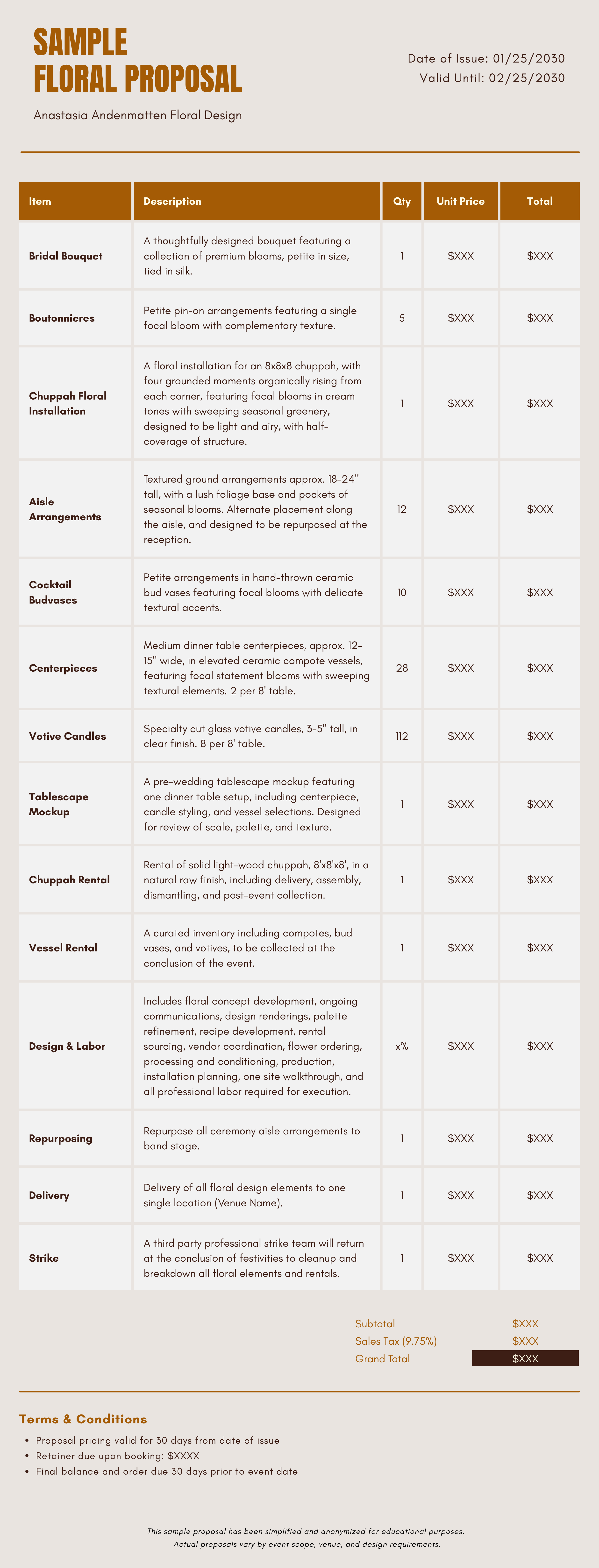
Wedding Florist Proposal Terms, Defined
Here's a glossary of the most common terms you'll see on a wedding florist proposal.
Itemized Arrangements
Every individual floral piece, listed line by line with its own description, quantity, and price. Ideally including size and dimensions where applicable.
Vessel & Structural Rentals
The cost of renting physical vessels (i.e. bowls, vases, urns, candleholders, glass hurricanes) and structural elements (i.e. ceremony arches, chuppahs, mandaps, pedestals, columns) that the florist provides for use on the day. These rentals are collected or returned after the wedding.
Design Fee
The cost of the creative work behind your florals. Typically includes emails and phone calls, design deck, palette refinement, digital renderings, rental and inventory planning, ingredient selection, recipe development, floral ordering, mockup design, vendor coordination, and design adjustments. It could also include site visits and venue walkthroughs, but worth checking.
Important note: Some florists fold the design fee into per-arrangement pricing; others itemize it separately. Both approaches are valid, but the structure should be clear.
Labor Fee
The manual work of building your florals: market runs, flower processing and conditioning, mechanical builds, arrangement design and construction, packing, and the final installation/setup at your venue. Labor is usually broken out separately from flower cost. A florist who doesn't itemize labor is typically folding it into per-arrangement pricing (again, fine, but worth noting).
Delivery / Travel Fee
This should cover the following costs of getting florals to your venue:
Mileage
Fuel
Tolls
Vehicle costs (including refrigerated truck rentals if applicable)
Parking fees
Drive time for roundtrip from studio to venue
Multiple stops required (e.g. if installation is split between locations, like ceremony at one site, reception at another, or bouquets and boutonnieres need to be delivered to an off-site getting ready location)
Travel fees for remote locations such as Big Sur, Mendocino, or Carmel, including lodging and travel time
Repurposing Fee
Also known as ‘stay-and-move,’ this is the service of moving florals from one space to another mid-event. The most common example: ceremony aisle arrangements moved and repurposed to the reception. This requires wait time, labor, and team members on-site (plus sometimes extra product), which is why it's often billed separately. If you want this service, ask for it in the proposal upfront.
Strike (or "Breakdown")
The cost of breaking down and cleaning up florals at the end of the night. Includes collecting vessels, removing installations, and leaving the venue spotless. Typically itemized separately. If it's missing from your proposal, the florist may be expecting you, your venue, or your planning team to handle it. Clarify before you sign.
Mockup
A pre-wedding sample of your proposed table arrangements so you, your planner, and your florist can evaluate how the design comes together in person before the day. Either included as a paid item or available as an add-on.
Sales Tax
State and local tax applied to floral services. In California, approximately 8% to 10% depending on the county. Sales tax should always be a separate line item, never folded into the totals.
Payment Schedule
The timeline for when each payment is due. A typical schedule: deposit at signing, midpoint payment halfway through, final payment 30 days out. Some florists do two payments, some do three. It’s good to have this schedule in writing.
Final Order Cutoff Date
The date by which your final order must be confirmed, including arrangement counts, vessel choices, and design scope. Typically 30 days before the wedding. After this date, changes are limited or may incur additional cost. Worth confirming.
Proposal Expiration Date
The date by which the pricing in the proposal is valid. Typically 14 to 30 days. Wedding florist pricing shifts with seasonality, demand, and how far out your wedding date is, so proposals don't stay open indefinitely. If you wait to sign after the expiration date, the florist may need to revise the numbers.
Deposit / Retainer
The non-refundable amount due at signing to officially book your wedding date. It secures your spot on the florist's calendar and compensates for opportunity cost (other inquiries turned away for the same day). Amounts vary by florist.
How to Compare 3-5 Wedding Florist Proposals Side by Side
Here’s the framework I recommend for couples and planners evaluating a shortlist (ideally 3 florists).
Step 1: Don't Compare Totals First
The most important rule. The number at the bottom of a proposal is meaningless without context. A $25K proposal that includes mockups, vessels, strike, and stay-and-move is fundamentally different from a $25K proposal that includes none of those things. So make sure inclusions are equal before comparing the totals to avoid wedding-day disappointment.
Step 2: Focus on Inclusions
Start by confirming each florist is quoting the same exact scope. Without that, you're comparing different weddings.
The simplest way to compare proposals is a checklist of inclusions. For each proposal, ask:
Is a mockup included?
Is strike included?
Is stay-and-move included?
Are vessels included?
Are service charges and sales tax disclosed?
If you have a planner, walk through this with them. They've read more proposals than you have, and they'll help you spot what's missing. The goal here is to avoid any unwanted surprises down the road.
Step 3: Account for Itemized vs. Folded-In Fees
Some florists itemize everything. Others fold labor and install into per-arrangement pricing. Both are valid, but they make direct comparison harder. When labor is folded in, per-arrangement prices look higher. When it's itemized, per-arrangement prices look lower but the labor line adds up.
How to handle it: total each category (flowers + labor + install) and compare categories, not individual lines.
Step 4: Identify What's Missing
Where most couples get burned and feel wedding-day disappointment at the end of the day is in the gap between what you assumed was included, and what’s actually in the contract.
Common missing line items:
Size, scope, and flower type → Ask for these details to be included so your centerpieces aren’t half the size you imagined.
Mockup → Mockups typically run $500 to $1,000+, so knowing the price point before you sign avoids sticker shock later.
Vessels, candles, and structural rentals → Find out if the vessels included are standard/basic or upgraded specialty pieces, or sourced and billed separately.
Repurposing → Is it included, will it be added on later, or will your guests or planner end up in charge of this?
Strike → Confirm who’s responsible for this (and at what cost) so it doesn’t land in your or your planner’s lap.
Delivery to a second location → Make sure this is included upfront if for example, your bouquets/bouts need to be delivered to a separate Getting Ready location.
Sales tax → Make sure this isn’t left off until the final invoice, and instead transparently itemized.
If a proposal is missing one of these and you need it, the "cheaper" proposal isn't actually cheaper once you add it back in.
Step 5: Adjust for Value & Fit, Not Just Price
Once the proposals are leveled (apples to apples on inclusions), compare what you're actually getting AND how each florist felt. The florist whose work you genuinely love, who communicates clearly, who feels aligned with your style and vibe, and who makes you feel like the day is in good hands is worth more than the same total from someone who doesn't tick those boxes. Numbers matter, but so does your gut instinct, so consider both.
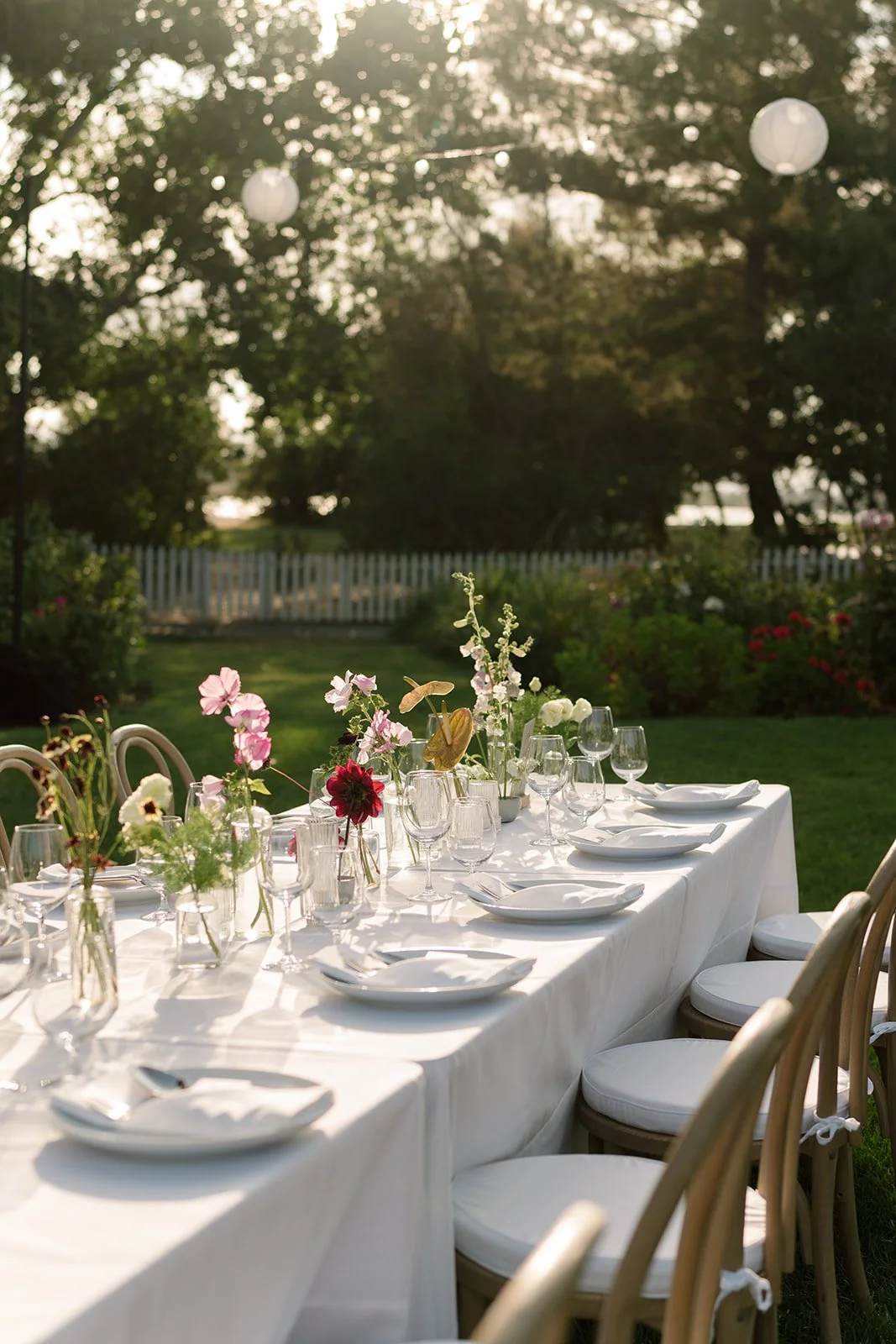

Photography by Catherine Marie Taylor | Planning by Lorelle Events
A Planner’s Perspective
A colleague of mine, San Francisco Bay Area wedding planner Caitlin Gutierrez, has read more floral proposals than most couples will see in a lifetime, and her standard is clear:
"I tend to favor a concise proposal where numbers are super clear. Being super specific about what exactly is included in pricing, including size, volume, and flower types, is helpful. The more details, the better." — Caitlin Gutierrez
The more specific the proposal, the smaller the gap between expectation and reality. A solid proposal prevents surprise charges and expectation gaps later.
Caitlin also had a useful note on how to think about proposal imagery:
"Imagery is helpful, but I generally urge clients to go off of the florist's past body of work and general style." — Caitlin Gutierrez
A few renderings or mood board images in a proposal can be reassuring, but they're not the strongest signal. The florist's broader portfolio is. Their existing body of work should resonate with you.
When Caitlin reads a proposal she trusts, she'll forward it to her couples knowing they won't get blindsided. When she reads one she doesn't, she'll often go back to the florist and ask for more itemization before recommending it.
Reading Between the Lines
A wedding florist proposal is more than just a price tag, but a window into how a florist operates. Specific, itemized, transparent indicates a florist who runs their studio with care. A proposal that is vague, lump-summed, or light on details is also valuable information.
Either way, you're now equipped to read what's in front of you.
If you're planning a wedding in the San Francisco Bay Area or Napa Valley and want to see a custom floral proposal, I'd love to hear from you. Inquire here.