How to Choose a Wedding Florist Beyond Instagram: A Bay Area Planner’s Vetting Process
A San Francisco Bay Area wedding planner and florist guide couples and planners through what actually matters when choosing a florist, and what a pretty grid never shows. In collaboration with Caitlin Gutierrez Events.
First, Real Talk
If you've spent any time researching wedding florists, you've probably run into the same problem: they all look talented and capable on paper. Because they are! Their portfolios are beautiful, and their feeds polished. The tricky part is that none of it tells you which florist is actually right for your wedding.
So I sat down with Caitlin Gutierrez, a very respected Bay Area planner whose vendor judgment I trust, and asked her the question we all want answered: how do you actually choose a florist?
It turns out that what makes a florist great is something Instagram can’t really show you. For instance: their communication, process, pricing transparency, who’s actually running your install, how they handle a problem at 4pm on your wedding day, and more.
Read on for Caitlin’s full evaluation process, with my own perspective layered in, plus specific ways you can make the best decision for you.
If you're choosing between three or four florists who all look equally talented, this is for you.
How Planners Actually Vet Florists
Let’s get right into it.
When your planner sends you a shortlist of 3-5 florists, they’ve already done the hard part of vetting. And while you ultimately have the final say, understanding what planners evaluate in the vetting process can aid your own process.
Here's the checklist a great planner runs through:
✓ Track record together. Has the planner worked with this florist before, and how did the wedding actually go? Or, if not:
"If I have never worked with a florist before, referrals from other planners (or other florists) are a must." — Caitlin Gutierrez
✓ Peer reputation. What do other planners and florists say about them? The wedding vendor world (especially in the Bay Area) is small, and reputation among peers is the most accurate signal of how someone actually shows up. A florist who is consistently recommended by planners and fellow florists has earned a level of trust that’s difficult to build through marketing alone.
✓ Inquiry response speed and quality. How a florist handles the first email is a preview of how they'll communicate for the next 12 to 18 months. Quick, thoughtful, personalized responses signal organized systems, attention to detail, and the ability to manage a wedding successfully. Slow, generic, or unclear responses signal the opposite. (Caitlin called this out as one of her two biggest red flags.)
✓ Quality and clarity of the proposal. A florist's proposal is the clearest preview of how they actually operate. Planners look for specific line items, transparent pricing, and clear scope. A vague, lump-sum quote signals the opposite.
"I tend to favor a concise proposal where numbers are super clear. Being super specific about what exactly is included in pricing, including size, volume, and flower types, is helpful. The more details, the better."
✓ Style fit. Planners evaluate a florist's full body of work, looking at multiple complete weddings, not just the highlight images. They're checking whether the florist's natural style aligns with the couple's vision.
✓ Creative leadership. A great florist goes beyond executing a Pinterest board, and brings ideas, challenges assumptions when needed, and translates inspiration. The strongest florists are collaborators, not order-takers.
✓ Capacity and on-site presence. Planners want to understand how a florist structures their business, how many events they’re taking on, and whether the lead designer will be personally involved on wedding day.
"A big one for me is how many events or weddings they are taking on per year, and if they'll be on-site come wedding day. I run a boutique planning firm that takes on a limited amount of bookings each year in order to deliver 150% to all of our clients. Knowing that a florist runs their business with the same ideals is important.”
✓ Collaboration and teamwork. The best florists work seamlessly with planners, venues, and other vendors to ensure every piece comes together smoothly.
"There's more to choosing a florist than just the pretty pictures on Instagram. To me, it's equally important to have a partner that is great in the planning process as well as on event day, in addition to liking their style."
Try this: Ask your planner who they trust most, and why. Or, ask each florist on your shortlist to name 2-3 planners they regularly work with, then look those planners up. Strong florists are embedded in a network of planners, photographers, and other vendors.
What Instagram Doesn't Show
A florist’s portfolio is the easiest thing to evaluate, and their Instagram feed or website portfolio is a great starting place. A florist’s operational reality, on the other hand, is harder to evaluate and not as visible.
Aside from reputation and referrals, here's what makes Caitlin trust a florist beyond their design work:
"Clear communication, timely responses, and office organization all make a huge difference in whether or not I will work with someone."
A planner's trust signal can be operational, not just aesthetic. While operations might seem unrelated to flowers, they directly affect how smoothly your day runs.
Here’s what office organization for a florist looks like:
A clear, centralized place where all of your wedding details, design decisions, invoices, and documents live
A welcome packet within days of signing that includes key dates, deliverables, and what's expected from your side
A live, shared design document you can access anytime
Proactive scheduling of key dates and deliverables
A clear process for updating floral quantities, designs, or budget throughout planning
Here’s what clear communication from a florist looks like:
Consistent 24 to 48 hour response times
Honest budget conversations
Proactive vendor coordination
Written confirmation for every change
An additional operational signal worth a closer look: capacity. Two florists can have equally beautiful portfolios while running very different businesses. One may take on a dozen weddings a year and personally lead every installation. Another may take on 50+ weddings and rely on a larger team. Neither approach is inherently better, but they create different client experiences.
If personal attention and direct involvement from the lead designer matter to you, it’s worth asking about.
Try This: Two questions you can ask any florist on a discovery call:
How many weddings do you take per weekend, and how many per year?
Will you personally be on-site on my wedding day, or will your team handle the install?
These aren’t rude questions to ask, and you can look at them as data points. Some studios are built for scale and supported by larger teams. Others intentionally limit the number of weddings they accept and keep the lead designer closely involved throughout the process. Neither model is better, but they create different experiences.
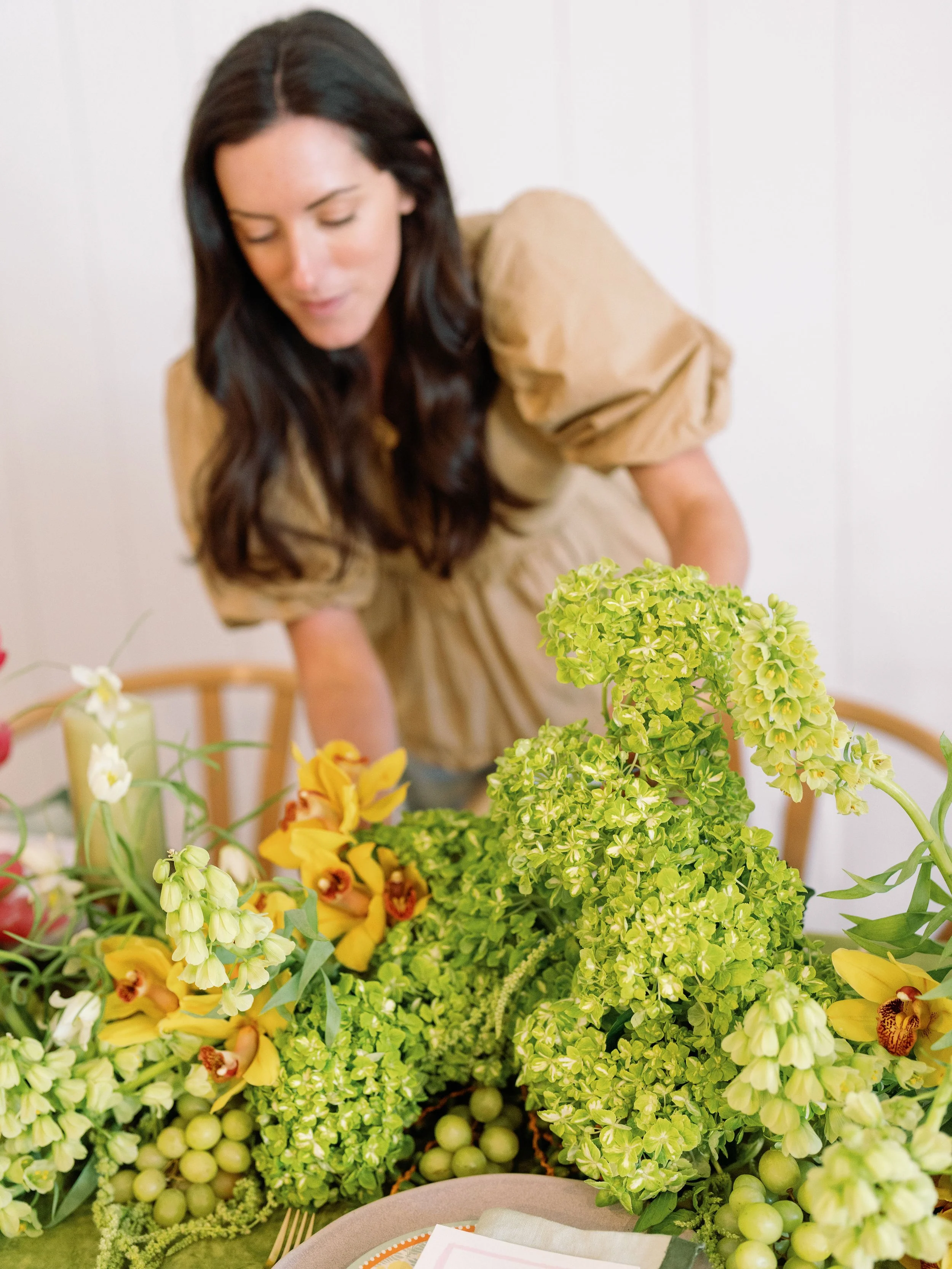
Photography by Olivia Marshall
How to Evaluate a Floral Proposal
The proposal is where the real specifics either show up or don't.
I asked Caitlin if she's ever worked with a florist whose Instagram set expectations the wedding day didn't match. Her answer was honest:
"Yes, this has happened to me, and I try to do my best vetting to make sure it doesn't happen again. Being super specific about what exactly is included in pricing, including size, volume, and flower types, is helpful. The more details, the better. Of course, we never want to micromanage another professional, but setting clear expectations for the client (who most likely has never planned a wedding before) is vital."
The theme here is specificity and transparency. Beautiful images won’t tell you whether your ceremony arch is full coverage or half coverage, if your centerpieces will have premium blooms, and what the change-order policy is.
So where does that leave imagery when it comes to a floral designer’s proposal?
“Imagery is helpful, but I generally urge clients to go off of the florist's past body of work and general style”
I also asked Caitlin what couples often don't think to ask about, but should:
"Mockup pricing, rental costs, candle costs, and factoring in if you want the florist to stay and move florals."
These are real line items that you do not want to miss in the first proposal round if they’re important to you. Knowing whether these are included (or available as an add-on, and at what cost) is critical for budget planning.
🌿 Florist's Take: No two florist proposals look the same. They vary in format, language, and what's actually included. When you're sitting with three proposals side by side, the urge is to compare the totals first. Instead of leading with the total, compare what's included. For example: Two proposals can both total $25,000 and deliver very different experiences. One may include candles, rentals, strike, repurposing, and a floral mockup. The other may require those items to be added later. Similar totals do not always mean similar scope and level of service.
Areas of a floral proposal worth understanding before you sign:
What arrangements are included, and at what scale?
What rental items are included (vessels, candles, structures, etc.)?
Are delivery, installation, strike, and cleanup included?
How are design revisions or change orders handled?
Are mockups, repurposing, and site visits available if desired?
What is the payment schedule?
What flexibility exists around flower selection and seasonality?
Try this: Ask: what's NOT in this proposal that I'll need on my day?
The Non-Negotiables When Choosing
If Caitlin had to give couples one non-negotiable when it comes to choosing a florist, it would be this:
"Please ensure you like the florist for their general style and vibe so that you can trust them to execute on wedding day. If you are choosing someone based solely on price and don't LOVE their work, then it's likely not going to be the wedding day you envisioned."
Price-led florist decisions almost never produce wedding-day satisfaction. If price is the deciding factor and you don't already love the work, you may spend the day wishing you'd gone with the florist whose style you really connected with.
Budget matters, but so does fit, so your decision should honor both.
The other piece of advice Caitlin gave around fit:
"I generally urge clients to go off of the florist's body of work instead of trying to ask someone to design something that's not their typical look or desired vibe."
Trying to get a florist to design outside their natural style rarely produces strong results. If you're pushing to make a florist's portfolio look like what you actually want, you're already in murky water. Either find a florist whose existing work resonates, or accept that the result won't look exactly like what you pinned.
🌿 Florist's Take: Fit goes both ways. I want to feel certain you're the right fit for my studio, just as much as you need to feel certain I'm the right florist for you. The strongest weddings I've designed are the ones where the fit was obvious to both sides from the start.
Try this: At the end of your discovery call, ask the florist: "Do you think we're a good fit for your studio?”
The Five-Minute Gut Check: What to Ask Yourself After a Consultation
Ultimately, what you’re evaluating isn’t just design talent, but trust.
Before you commit, take five minutes after the consultation and check in honestly:
Did this florist have thoughtful opinions, or simply agree with everything I said?
Did they help me understand tradeoffs between design, budget, and logistics?
If something went wrong on wedding day, would I trust them to solve it without involving me?
Am I choosing them because I genuinely connect with their work, or because they’re available and within budget?
If I handed over full creative control tomorrow, would I feel excited or nervous?
There's no shortage of talented florists out there. The right one for you will be an easy yes to all of these.
Making the Final Decision
Pretty pictures only get you so far.
Choosing a florist is about far more than finding beautiful work. You’re looking for a design style that resonates, a process you trust, and confidence in the person behind both.
If your planner has already vetted options for you, you’re already in a great position. From there, trust yourself. The right florist should feel like a natural fit, not just creatively, but in how they communicate, collaborate, and guide you through the process.
When all of those pieces align, the decision becomes much easier.
Meet the Co-Authors
About Caitlin Gutierrez Events
Caitlin Gutierrez Events is a planning firm specializing in full-service production based in Marin County, nestled in the Northern California Bay Area between San Francisco and Wine Country. Caitlin's expertise spans corporate, social, and wedding planning and design.
🌐 caitlingutierrezevents.com 📷 @caitlingutierrezevents→ Inquire about planning with Caitlin
About Anastasia Andenmatten Floral Design
Anastasia Andenmatten is a Northern California wedding and event florist serving San Francisco, Napa Valley, and beyond. The studio specializes in custom wedding florals and luxury corporate and brand event design that pushes the envelope, with a focus on flawless execution.
🌐 anastasiaandenmatten.com 📷 @anastasiaandenmatten→ Inquire about florals with Anastasia
Photography by Meghan Baskin, Adriana Klas and Olivia Marshall