Behind the Design: A Non-Traditional Escort Display in Napa Valley

One of the most rewarding parts of my work (beyond designing with flowers) is the end-to-end collaborative process of translating an idea into something guests can feel, move through, and remember.
I’ve found that the most successful installations don’t begin with the flowers, but with the intention behind it: a shared vision, thoughtful partners, and a willingness to design with meaning.
Today, I’m sharing a behind the scenes look at one of my favorite installations to date, from early inspiration, to conceptual development, to sourcing, to final execution.
Project Definiton
Camille of Jacinda Weddings & Events reached out to me with a special project dear to her — she was launching new branding for her business, and was organizing a multi-faceted shoot at Carneros Resort & Spa that would be a part of the visuals for her new website. (Side note, this is one of my favorite venues!)
I enjoy working with Camille because she focuses on personal details, intentional touches, and moments of connection. She’s all about creating captivating moments, as am I. This project was the perfect fit!
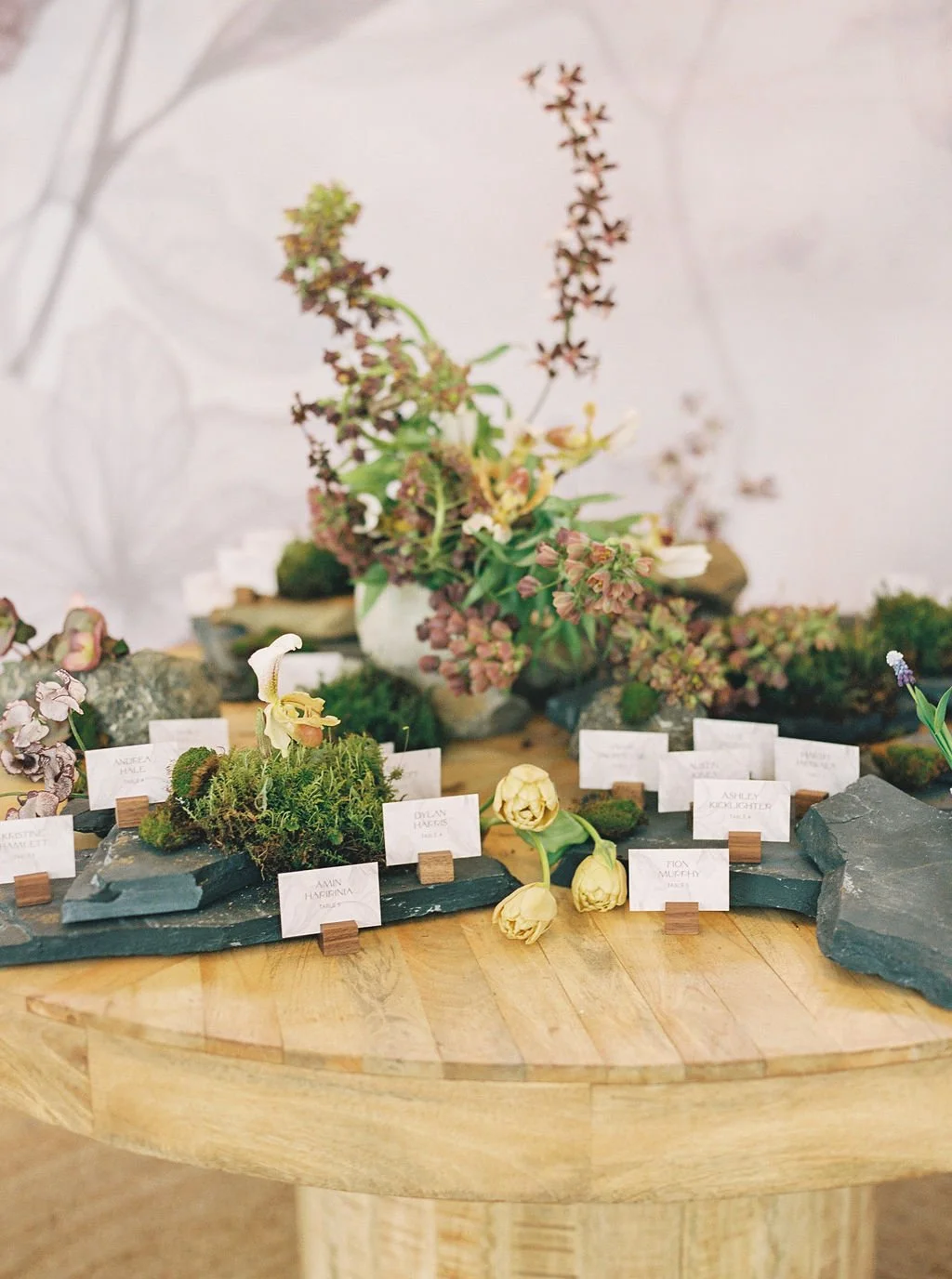
For this shoot, we created an escort display, bar and cocktail styling, and dinner tablescape. In this post, I’m focusing on the conceptualization and creation of the escort display.
The goal: a reinterpretation of the traditional escort wall in favor of something more sensory and experiential for guests.
The inspiration: Japan at springtime. Camille wanted to echo the beauty of Japanese gardens — serene, calming, and welcoming.

THE INSPIRATION:
Japan at springtime, echoing the beauty of Japanese gardens — serene, calming, and welcoming.
Inspiration Gathering
To get my bearings, I spent some time at the Asian Art Museum in San Francisco. If you haven’t been, I highly recommend. At the time, they had an exhibit featuring Japanese ink painting which I drew inspiration from.
At the same time, I was planning my first trip to Japan for the following November — so I pulled inspiration from visuals I’d found from moss gardens there (what would ultimately be my favorite part of our Japan trip).
In my research, these were the particulars I drew inspiration from:
Calming color palettes
Natural elements like moss and stone
Flowing lines
Ikebana floristry
Wabi Sabi design
Negative space
I also drew inspiration from what would serve as the backdrop for the installation itself: original artwork by Valley & Coast Paper Co. that blended Japanese Sumi ink painting with vintage x-ray photography.
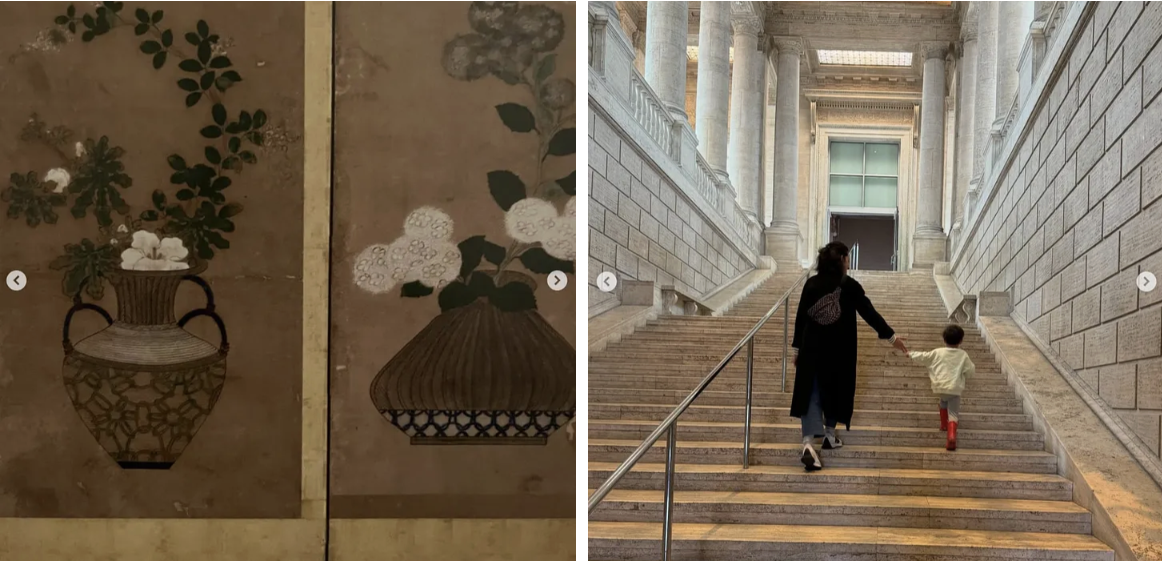
Visiting the Asian Art Museum in San Francisco to gather inspiration (brought my little buddy with me!)
Floral Concept Development
It was time to take all the inspiration and translate it into a tangible floral plan.
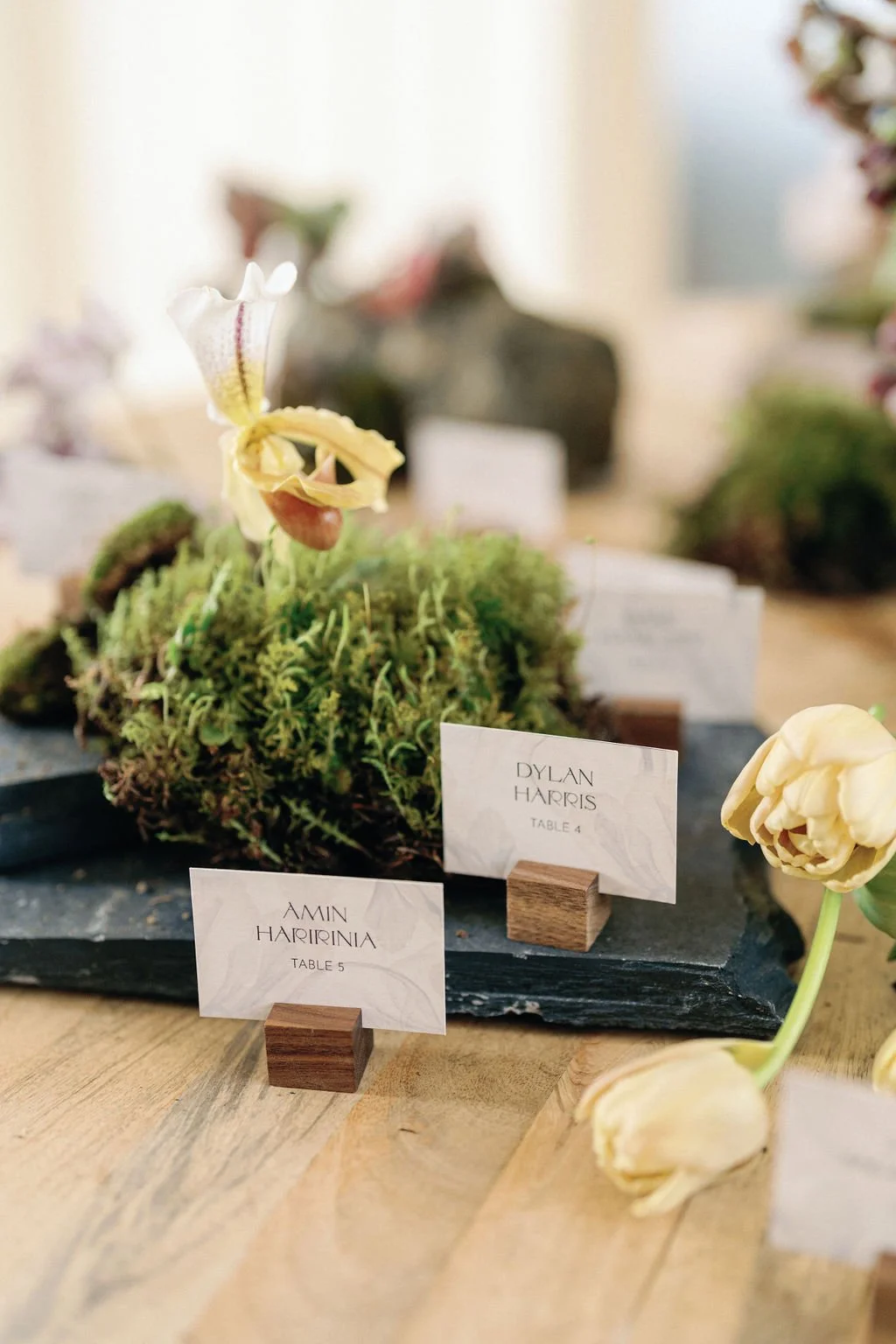
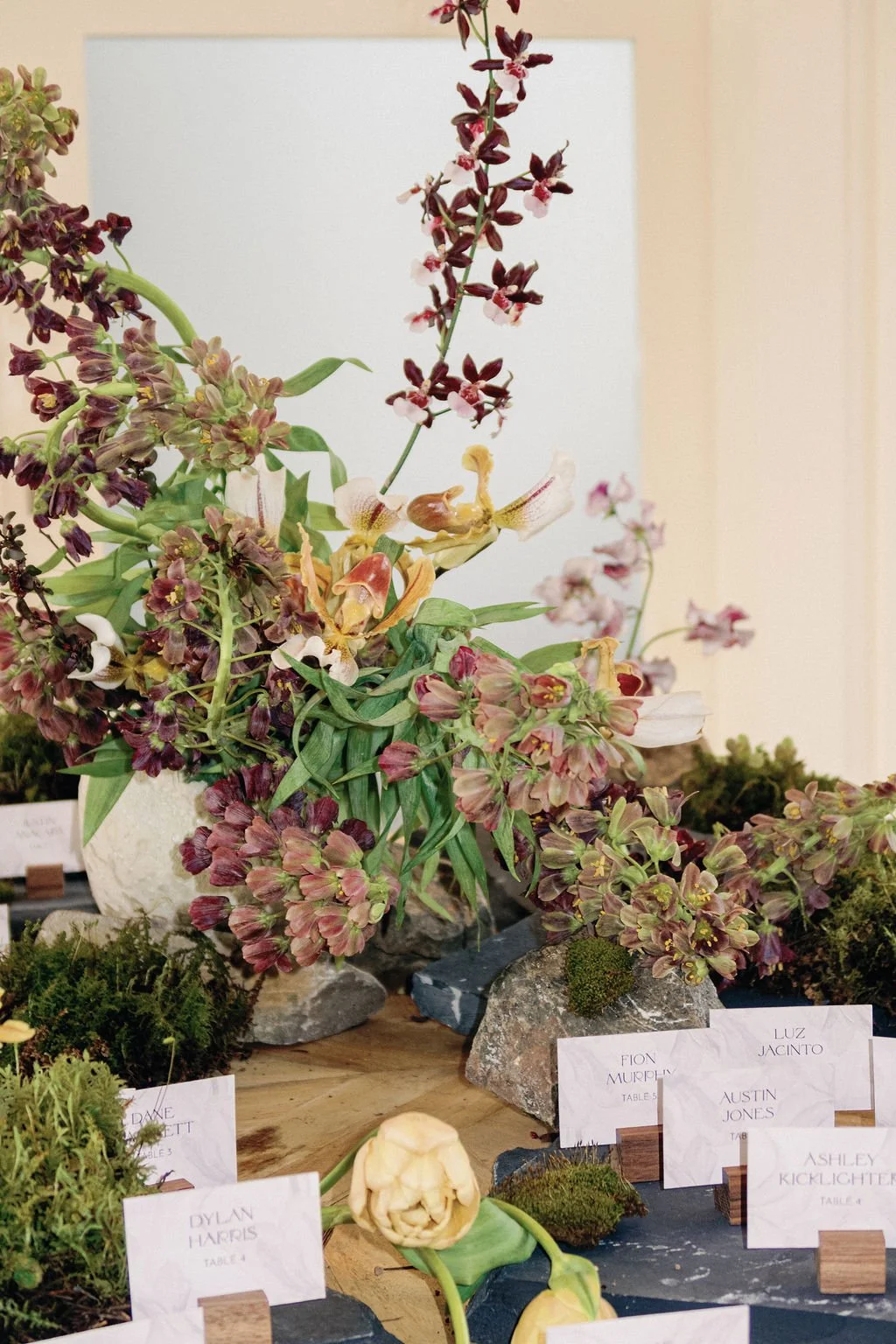
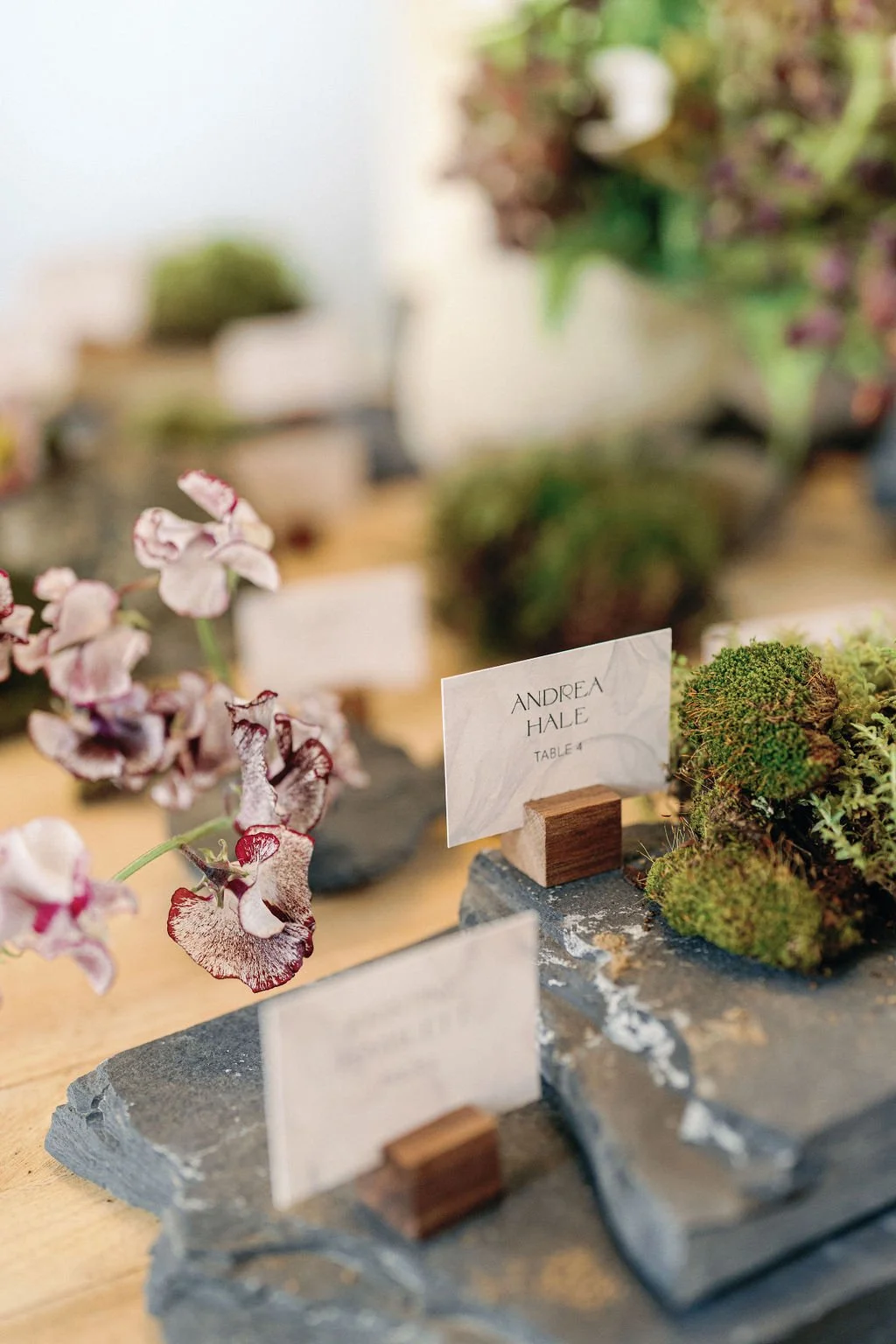
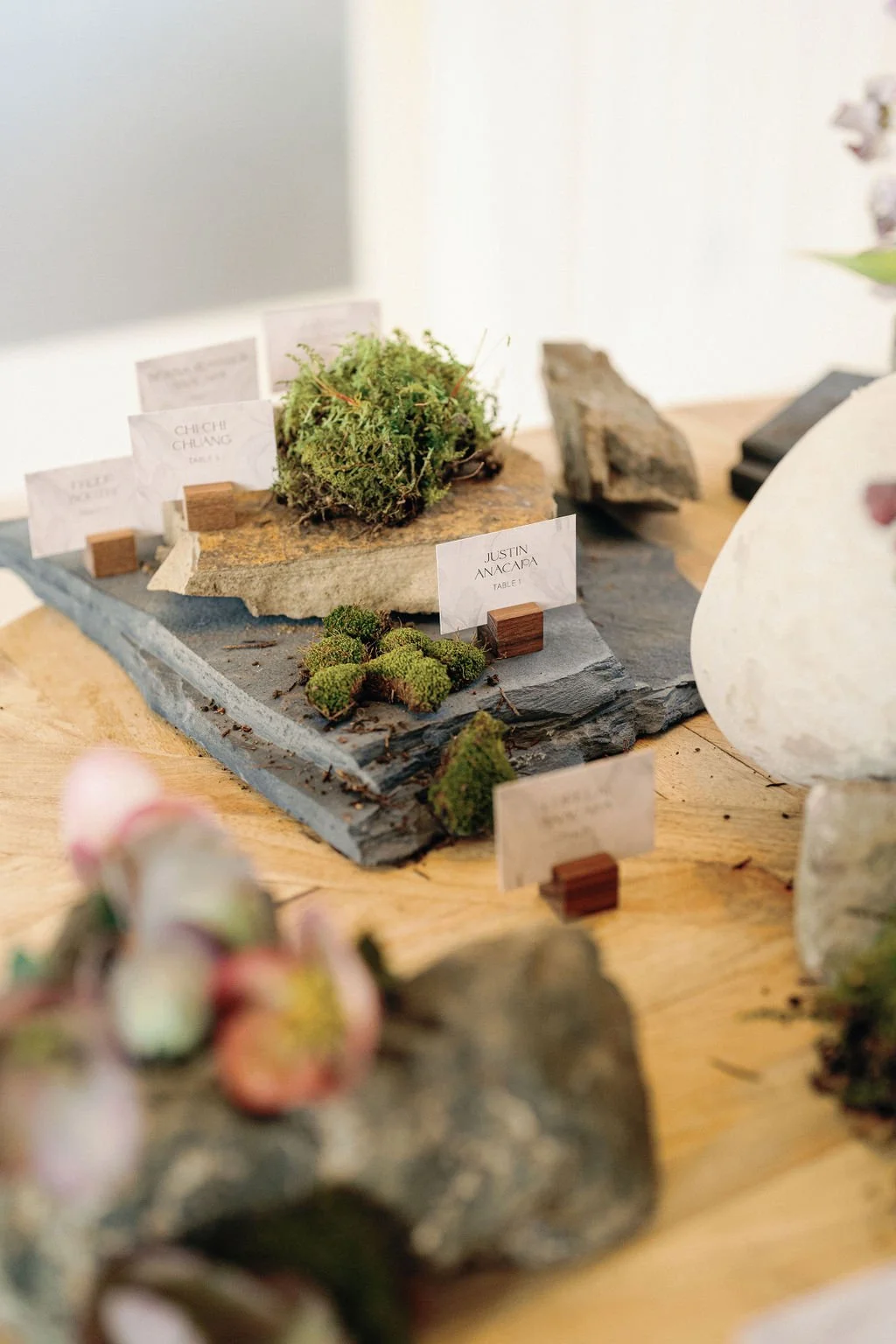
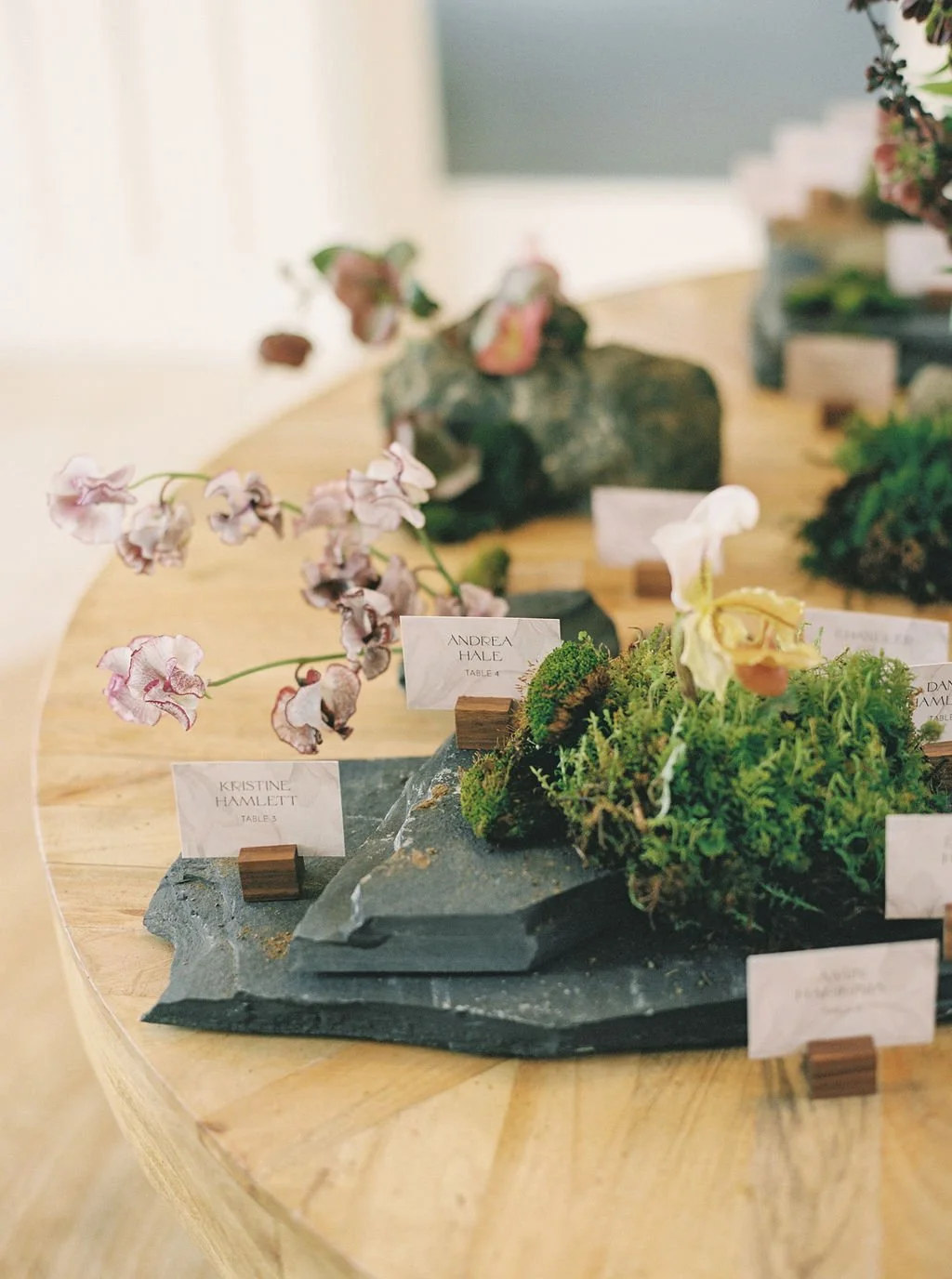
To make the installation feel interesting and interactive, Camille envisioned guests relaxingly seeking their name amongst the materials. So, using a round table, we planned out an all-sided experience where individual name cards would be placed randomly throughout the display.
I knew early on I’d be utilizing Ikebana style design. Ikebana is a Japanese style of floral design that focuses on simplicity, balance, and intention — namely, fewer stems arranged thoughtfully. I envisioned single-ingredient moments peeking out throughout the display.
To establish subtle contrast of shape and depth, half the install would be across the tabletop, and more delicate and grounded by design. To create a vertical line and a bit of quiet drama, a larger focal arrangement would sit in the middle.
To connect it all to nature, a bed of live moss and slate rocks of varied sizes served as the base.
Floral Design Translation
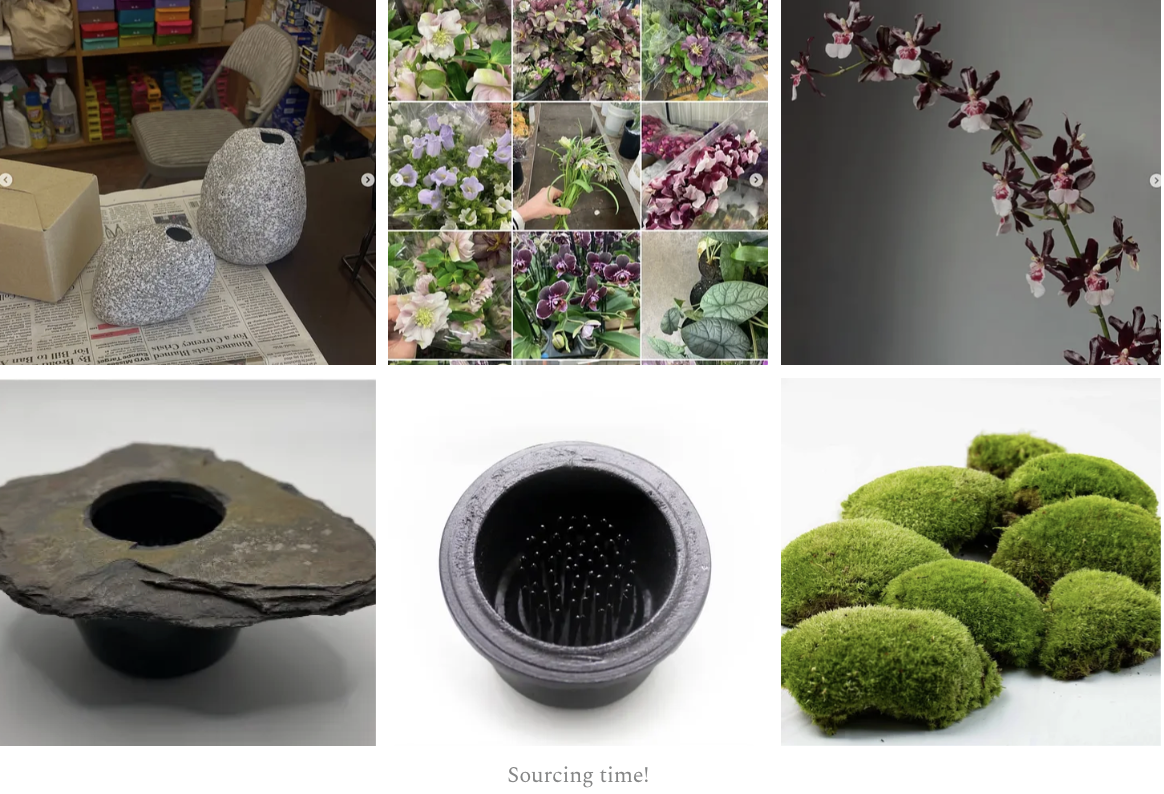
Sourcing is one of my favorite parts of the process. So I headed to Japantown and the Inner Richmond to hunt down the perfect vessels.
I window shopped the flower market to see what was in bloom, and snapped lots of reference photos. For floral ingredients, I ultimately landed on: Japanese sweet peas, lady slipper orchids, chocolate oncidium orchids, hellebores, fritillaria, grape hyacinth, and belle epoque tulips.
Mechanics were a no-brainer: kenzans inspired by Ikebana (and sustainable!) floristry. A kenzan is a heavy metal flower holder with sharp pins that stems are pressed onto to hold them in place. Some of my favorite pieces are my Japanese slate vase with a metal flower frog insert (pictured below — can find these vintage on Etsy), and my pin cups by Floral Genius.
Camille had a hardscaping contact, where she sourced the broken slate slabs from to use in the display.
Perhaps the piece I was MOST excited about: the live moss that I ordered direct from Oregon, which I’d use to cover parts of the stones.
Execution & Installation
The actual installation part comes easy when the materials are so good. It’s always a pleasure working with a team who’s passionate, inspired, collaborative, visionary, and kind. We spent the day at Carneros Resort & Spa together bringing the vision to life.
Olivia Marshall captured the shoot for us. You can see the entire day featured on Wedding Sparrow.